


The Rise of Atmospheric Art: Why We Are Craving Calm in an Overstimulated World.


In a world of endless scrolling, breaking news alerts and constant digital noise, many people are beginning to seek something quieter. Something slower. Something that allows the mind to breathe.
This may explain the growing rise of atmospheric art — artwork that evokes feeling, memory and mood rather than demanding immediate attention. Across interiors, fashion, photography and contemporary art, there is a visible shift away from loud visual stimulation and toward softer, dreamlike experiences that create emotional calm.
Atmospheric art does not shout. It lingers.
It invites viewers into a space of reflection, stillness and imagination, offering a kind of visual exhale from the overstimulation of modern life.

Living in a Constant State of Stimulation
Most of us now move through our days surrounded by relentless information. Social media feeds refresh endlessly. News cycles repeat stories of conflict and uncertainty. Notifications interrupt moments of quiet before they even begin.
Our attention is constantly being pulled outward.
This level of overstimulation has created a growing desire for environments that feel grounding and emotionally restorative. The spaces we live in are no longer simply functional — they have become places of refuge.
As a result, many people are becoming more intentional about the imagery they surround themselves with. Art is no longer viewed purely as decoration, but as something that influences atmosphere, emotion and mental wellbeing.
Soft coastal palettes, dreamlike landscapes, blurred horizons and surreal ocean-inspired imagery all offer a visual stillness that contrasts sharply with the speed of the digital world.

Why Atmospheric Art Resonates Now
Atmospheric art often focuses less on realism and more on emotion. It creates feeling through colour, light, texture and ambiguity. Rather than explaining everything directly, it leaves space for personal interpretation.
This openness can feel deeply comforting.
In uncertain times, people are increasingly drawn to artwork that feels immersive, contemplative and emotionally expansive. Dreamlike imagery allows viewers to momentarily step outside the noise of everyday life and reconnect with something quieter and more intuitive.
Ocean-inspired works in particular often evoke calm, memory and escape. Water has long been associated with reflection, subconscious thought and emotional depth. In contemporary interiors, coastal surrealism and atmospheric fine art are becoming increasingly sought after because they create environments that feel both peaceful and emotionally alive.
Rather than overstimulating the senses, atmospheric art softens them.

Art as Emotional Space
There is also a growing understanding that the aesthetics of our surroundings can affect how we feel. Minimal interiors, natural textures and calming visual environments have become increasingly important as people spend more time at home.
Atmospheric contemporary art works beautifully within these spaces because it creates emotional atmosphere without overwhelming the room.
Unlike highly literal imagery, atmospheric works often evolve over time. The viewer notices different details depending on mood, light and personal experience. This creates a more intimate relationship between the artwork and the person living with it.
In many ways, atmospheric art resists the culture of instant consumption. It asks the viewer to slow down.
To pause.
To feel.
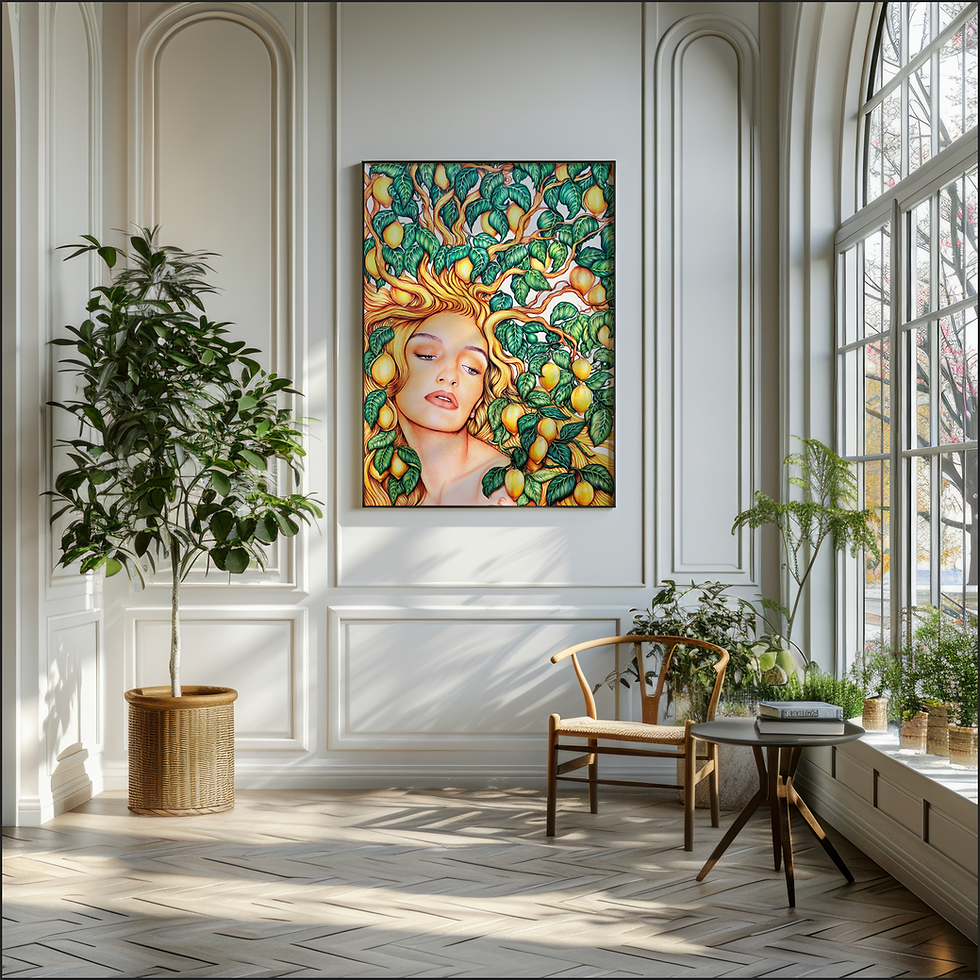
The Return of Dreamlike Imagery
Alongside this movement is a renewed interest in surreal and dreamlike visual language. In a world dominated by algorithms and constant productivity, there is something deeply human about art that reconnects us with imagination and emotion.
Dreamlike coastal art, atmospheric surrealism and ocean-inspired contemporary works offer a form of escapism — not as avoidance, but as restoration.
They remind us that softness still has value.
That stillness can be powerful.
And that beauty can exist quietly.

Creating Calm Through Art
As the world becomes increasingly fast-paced and digitally saturated, atmospheric art may continue to grow not simply as a trend, but as a response to the emotional needs of modern life.
People are searching for spaces that feel calm, meaningful and emotionally grounding. Art has the ability to shape those spaces in profound ways.
Perhaps this is why atmospheric and dreamlike contemporary art resonates so strongly today.
Not because it demands attention.
But because it offers relief from it.
And somewhere nearby, curled quietly in a patch of afternoon light, a cat already understands this perfectly.


Comments